Dr. Henry Woo: Working in Healthcare
Dr. Henry Woo’s Biography:
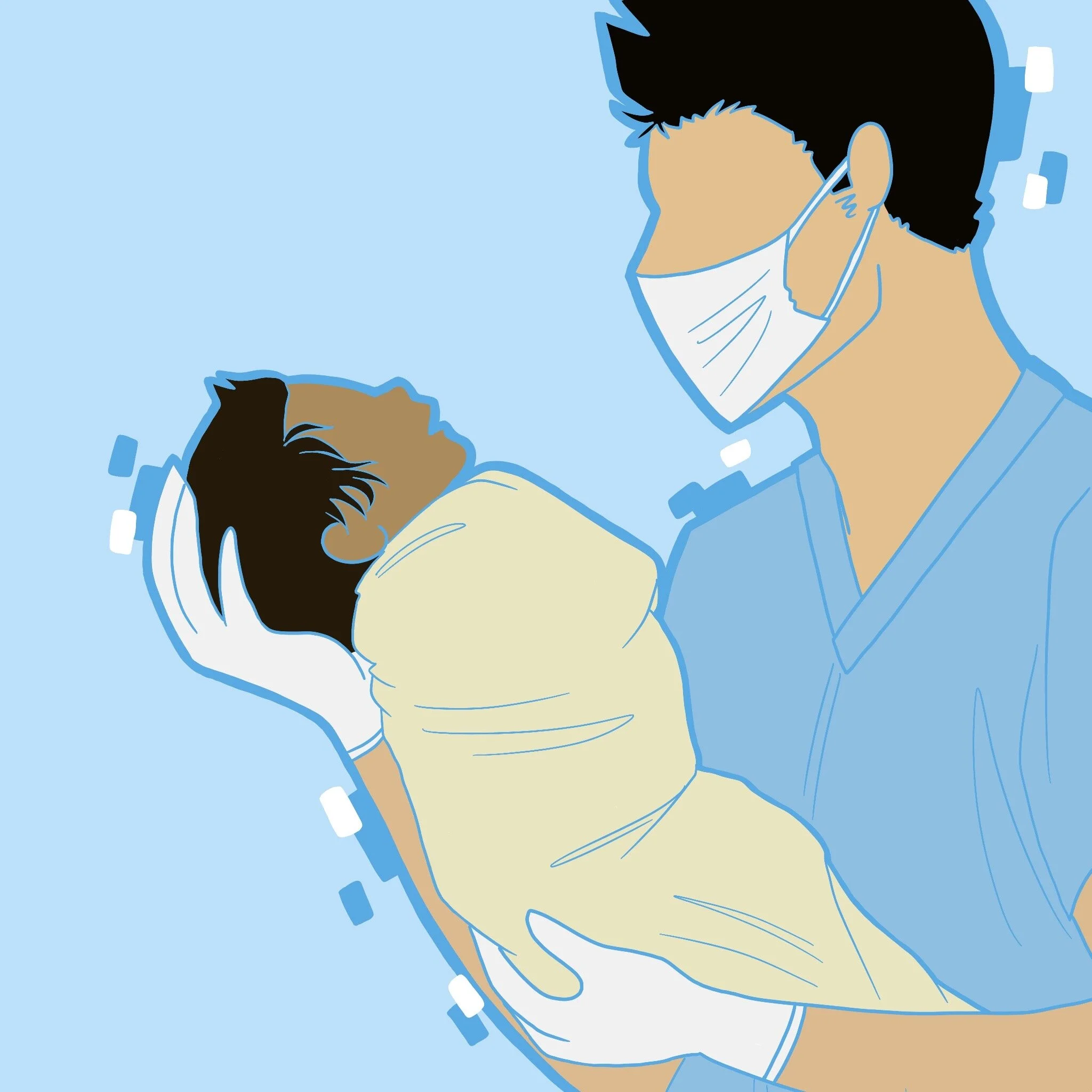
Dr. Woo has been an obstetrician-gynecologist for over thirty years in Vancouver. He started his medical career with a passion to help others and has carried that passion into his work ever since. The pandemic has challenged the medical field but healthcare workers like Dr. Woo have not let the challenges bring them down. Keep reading for a morsel of Dr. Woo’s story.
Can you tell me a bit about yourself and what you do?
I am an obstetrician-gynecologist which means I work in women’s health care and deliver babies. I also help take care of women when they are not pregnant as well. I have been working as an obstetrician since 1991 so I’ve been doing this for a very long time. I started medical school over 35 years ago! Becoming a doctor was a decision that I made in my early university years–I wanted to help people. During my exposure in medical school, I specifically enjoyed delivering babies so I eventually chose to be an obstetrician where I would focus on taking care of pregnant women. It was simply something I enjoyed doing. I think delivering babies is fun because you are able to do things for a family that no one else is able to do. As a result of our work, our patients are able to have a healthy baby at the end and that is a really rewarding sentiment which is why I continue doing what I do. It is definitely the most enjoyable part of my job. But of course, there are lots of non-enjoyable parts that go with it as well. Honestly, I don’t think many people understand what I do. Not a lot of people know anything about my job at all and I’m okay with that–I don’t know what an electrician does day-to-day either.
What are some challenges you have had to face?
Being a doctor is challenging in general. You have the responsibility of taking care of patients and patients are not always the easiest to take care of. These are challenges you learn how to deal with early in your career so now, the work no longer feels like a challenge. Since I have been doing this for such a long time, I have been planning on decreasing my workload this year. I will be trying to do less hospital work–a semi-retirement you can call it. Recently, however, it has become a challenge to not only deal with the work itself, but also this virus.
How has the pandemic impacted your work?
Prior to the pandemic, I would usually go to the hospital every morning, see my patients, and perform any surgeries that were required that day. Afterwards, I would go into my office and see patients there as well. With COVID however, the schedule has changed quite a bit. I still do on-call so we stay at the hospital and we take care of women in labour or women needing surgery for other problems. That part has remained the same but my time away from the hospital has changed quite a bit.
As well, the pandemic has resulted in many telephone calls instead of in-person visits. We have to provide the essential healthcare that we normally do, but the healthcare that can be done over the telephone is done virtually or shared between my colleagues. Sharing work means there are now multiple positions taking care of one patient instead of just me. So, instead of seeing my old patients all the time, we use this teamwork approach where certain people work in certain areas and then we all take turns by trying to make a schedule; it’s not based on your patients though, it’s based on whoever is in the hospital. This approach results in fewer people going back and forth between the hospital which minimizes the exposure to patients who could be positive with COVID. It also minimizes our exposure to other patients since we are healthcare workers and in theory, we’re highly exposed. This new method is not necessarily harder, rather, just delivered in a different model.
Nowadays, because of the distancing, we have had to slow down, see fewer patients, and limit our travel within the hospital. We have limited access to patients to us and we’ve had to limit people seeing us as well. I can’t just go out and walk around–I’m a healthcare worker! I need to be cognitive that I am a potential risk to someone. For example, say there is a room full of elderly people. I wouldn’t go in there because I’m a healthcare worker and I’m more of an at-risk person. I’m at risk of not only possibly getting it but also giving it to another person.
Working in healthcare during the pandemic is not really as exciting as some people might think. There hasn’t been any excitement in my part of the hospital because we’re dealing mostly with young healthy people. Especially because I don’t work in the ICU or the emergency department, if someone is really sick, I don’t actually see them. If I see someone with COVID, they are actually probably recovering or really mildly sick. We just need to follow many new protocols and do extra work to make sure that we don’t miss someone that could be positive. Other than all the extra protocols and use of personal protective equipment, it’s not as memorable as how we’ve had to change our interactions with people.
The dynamic between myself and my coworkers has also changed because we are now forced to be socially distanced. We can’t really hang out with each other, we have to wear a mask, and we have to sit six feet apart from each other–it is definitely not what we did before. Work now feels more like work instead of a happy place to go. It just feels like work. Many people enjoy going to work for the social aspect of it but now it is significantly reduced.
What are some changes you have noticed in yourself and your patients since the pandemic?
Well, first of all, all of my patients are scared. Younger people are less afraid but middle-aged younger people are too scared to even leave their homes. They are very grateful we can provide care through a telephone. We can actually provide quite a bit of care through a telephone instead of actually seeing the patient but some people are now missing their usual appointments because they are concerned about leaving the house. As an example, I usually check a patient every six months for whatever condition they might have, but people have been missing those visits because they are just concerned about leaving the house.
Obviously, I am scared as well because we are exposed to people we have never met before and they are not being swabbed before they come to the hospital. All they are doing is getting a questionnaire done. I have to rely on them to, first of all, be honest and truthful, and second of all, hopefully not be one of the few people that end up positive despite the screening.
I think it is super important for us to be grateful that prior to the pandemic, we had the freedom to go out and about, see our friends socially, see our patients in person, and hug our patients when they are happy or when they are sick. We can not do these things anymore. For instance, you want to show the newborn baby to the family but that is not allowed in the hospital anymore. A lot of the fun and social side of actually providing healthcare has been removed. Every day, I’m wearing a gown, mask, and gloves anytime I’m encountering a patient and a year ago, I would wear a T-shirt and shorts!
What is your biggest fear?
My biggest fear is healthcare right now. Look at the United States! There has been an anti-masking parade in the states recently where people don’t think you need to mask. Things like that are scary. People don’t take this seriously… that’s my biggest fear! Beforehand, we could vacation and travel, but if people don’t take this seriously, we are not going to get out of this for probably another two or three years!
What is something you are grateful for?
I am grateful that I have a job and that I am able to support my family. There were some people who were put out of work with this pandemic and they lost their main source of income. I am very thankful that I could take care of my family during this time.